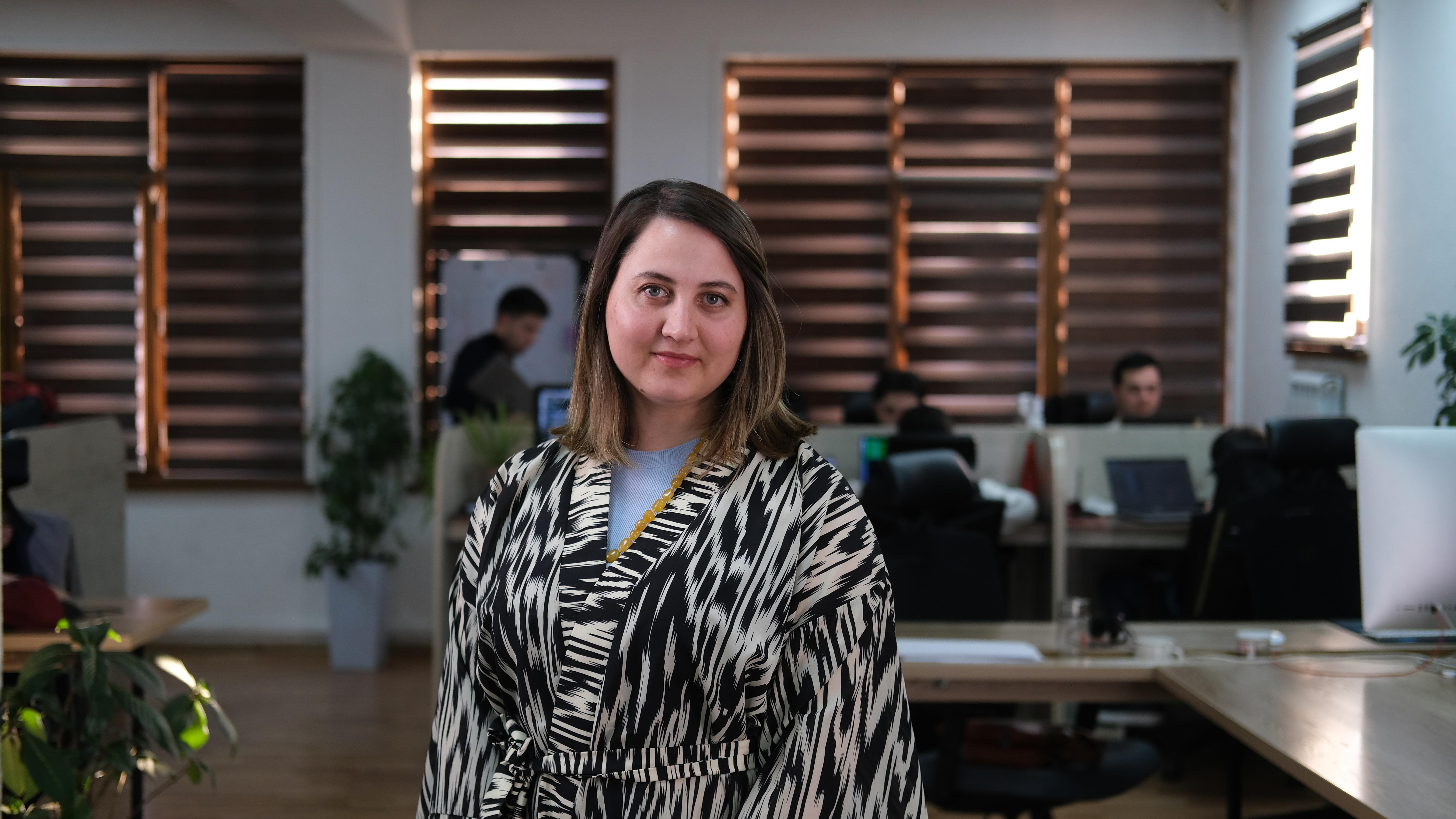
Tawney Kruger, a media expert at Financial IT and tech entrepreneur behind ventures including PraaktisGO, Zaytra.ai, and kpi.com, earlier shared about how to register a business in Uzbekistan. In her new piece, she focuses on the IT Visa program — explaining the process, the paperwork involved, and how it is opening new doors for international founders.
Tawney Kruger, city — Tashkent, media professional and tech entrepreneur, linkedin
10 days was all it took for me to get both my IT Card and my IT Visa. Today, Uzbekistan is steadily positioning itself as a genuine regional tech hub. From generous tax breaks to startup-friendly laws, the government is actively working to attract foreign entrepreneurs. One of the most beneficial tools they’ve introduced is the IT Visa program, designed to make it easy for investors, specialists, and founders to live and work here.As a founder involved in several other projects in the startup ecosystem, once I found out that this type of visa was possible, I immediately seized the opportunity. What surprised me the most was how easy it was to fill out the application and submit it online, but mostly it was the fact that it all took less than 10 days! Along the way, I discovered a few things that most guides don’t emphasize — including the fact that applications are voted on at IT Park’s end-of-month board meeting, and that holding an active guest or B2 visa makes the entire transition far smoother.As with everyone who undergoes this process, I submitted everything through the IT Park online portal. The portal's interface is straightforward and user-friendly, and it is available in English, much smoother compared to other government portals I have used.
In true Uzbek fashion and really showcasing the Uzbek hospitality, several IT Park staff contacted me directly during the process. I had my own personal support team guiding me through and keeping me updated on the status.
Since I submitted my application just before the board meeting, my case was reviewed and approved quickly.
In my case as a founder, the documentation looked like this:
— two copies of the application form: one stamped as proof of submission.
— copy and original of the IT Card, issued by IT Park.
— invitation letter issued by the Ministry of Foreign Affairs.
— certificate of state registration for my company.
— order appointing a director, if required.
— proof of my active business visa B2.
Applications are filed through the portal but finalized through the and Migration and Citizenship Registration Department in Tashkent or the relevant regional office, depending on your company’s location.
Let’s start by clearing up the difference, because this often confuses newcomers:
The IT Visa is a multiple-entry visa valid for up to three years. It allows you to legally live and work in Uzbekistan without needing a separate work permit.The IT Card is essentially your access pass to benefits and preferences. It gives you the right to:
—use medical and educational services in public institutions at the same rates as Uzbek citizens.
—purchase real estate of any value.
—obtain residence registration in any region of Uzbekistan for the validity period of the IT Card.
These conditions also apply to family members who hold an IT Visa or IT Card.
You need both. The visa gives you the legal basis to be here; the card opens the door to practical day-to-day freedoms.
While the process is simple and streamlined there are two key thing you need to keep in mind when you apply:
Applications are reviewed monthly. Every application — including mine — goes to IT Park’s board meeting at the end of each month. The board votes on approvals and rejections. This means if you apply right before a meeting, you could have your visa in 10 days, like I did. Apply right after, and you might be waiting closer to a month. Timing is everything.Have a valid guest or B2 visa first. An active business visa smooths everything. It keeps you legally in the country while your IT Visa is processed. Without it, you risk legal gaps that complicate your stay. The good news is that B2 visas are relatively easy to obtain — either through Uzbekistan’s consulates abroad or via the e-visa portal — e-visa.gov.uz. Another option is to get a guest visa that is obtained through an invitation from an individual or an entity legally registered in Uzbekistan through the Ministry of Foreign Affairs.
The IT Visa isn’t just paperwork — it’s policy in action. Uzbekistan is signaling very clearly that it wants to attract global tech talent, and it’s backing that up with real structures:
— 3-year multiple entry visas with renewable terms.
— tax exemptions for IT Park resident companies.
— property ownership rights for foreign founders.
— simplified hiring rules for foreign employees.
— human support during the application process.
For me, getting this visa was about more than just staying in the country. I want to become a part of their ecosystem and see it in action. Seeing this previously closed country opening up to the world is evidenced through this IT Visa. It shows that international founders aren’t just tolerated, but actively welcomed.
If you’re considering the IT Visa, here’s my advice:
1. Time it around the board meeting. Submit at least 7-10 days before the month`s end. Especially if you have limited time or are as impatient as I am, since I was short on time as my previous visa was about to expire, so it was a rush to get everything through.
2.Arrive on a valid guest or B2 visa. This is the easiest way to stay compliant during the transition.
3.Be ready with documentation. For specialists, the $30 000 income proof is non-negotiable. For investors, the $10 000 threshold must be documented with a bank statement.
4.Expect real communication. Don’t be surprised when IT Park staff call or message you — they genuinely want to help.
When I submitted my form, I thought it would be slow and filled with red tape. But what I got was clear, quick replies and a thumbs up in just ten days.
Of course, there are a few formalities: the main decisions are made once a month, and you need to have a valid visa before starting. However, my experience showed me a system that actually works - one designed to support founders, investors, and specialists who want to contribute to Uzbekistan’s fast-growing startup ecosystem.
For me, the IT Card and IT Visa are far more than documents. They are keys — keys to making bold moves in Tashkent, keys that place me on equal footing with local entrepreneurs, and keys that unlock the gates to one of Central Asia’s most dynamic ventures.
16 September 2026
16 September 2026
16 September 2026
16 September 2026