A native of Karshi with two diplomas and an insatiable thirst for knowledge, Madina Berdieva advanced from her first position at ABB Lummus Global in Uzbekistan to Shell’s headquarters in the Netherlands, where she now leads work in data quality management, digital strategy, and AI in capital projects. In an interview with IT Park Uzbekistan and The Tech, she shared how her professional journey began, how she moved to Europe, why she believes it is essential to remain “curious and polite”, and why Uzbekistan today represents a place where one can — and should — pursue career growth in IT.
Madina Berdieva, Karshi — Information and Digital Technology Manager, Shell, LinkedIn
I was born in Karshi. I hold two degrees — in philology and economics, both awarded with distinction. Later, I obtained a master’s degree in Enterprise IT Architecture from universities in the Netherlands and Belgium, also with distinction.
But if I were to speak of the true beginning, it was in 1999. I had just graduated from university and began working for ABB Lummus Global on the construction of the Shurtan Gas Chemical Complex. Two years later, I received an offer to continue my career at the company’s headquarters in The Hague.
At that time, securing employment in a foreign company was an extremely challenging task, particularly for women in the construction sector, where around 4,000 foreign men were employed, creating an exclusively male environment.
In addition, the workweek was demanding — from 7:00 a.m. to 6:00 p.m., Monday through Saturday, with a 150-kilometer commute each way by shuttle bus. I woke up at 4:00 every morning, bringing breakfast and lunch with me, as there were no canteens available on site.
In April 1999, my classmate and I became among the first women to be hired. I spoke fluent English and had computer skills. At that time, computers were rare and the internet was virtually non-existent. During my studies, I had taken computer courses to learn Windows, Excel, and Word. All of this was new, and very few people possessed such knowledge. My first salary was paid in U.S. dollars — $118. At that time, it was a very significant amount.
When I joined the supply department, the requirement was to implement a new ERP system. No one in the team knew how to use it, as it was a newly developed system by German programmers. I was handed stacks of technical documentation, and I decided to immerse myself in it, convinced that with sufficient effort, one could master anything.
I studied the manuals, collaborated with developers in Germany, and consulted colleagues in the United States and the Netherlands. Gradually, I mastered the system while also developing new business processes for logistics, warehousing, and inventory management, as well as processes for subcontractor supply tracking. I trained the team, implemented the processes, and published daily KPI reports on a board — essentially, my very first dashboard.
Using this system, we managed 450,000 tons of pipeline materials. I introduced a test version of the ERP system for engineering, procurement, and construction — and it proved successful. Later, the company purchased this system for $6 million. I was simply doing my job, not realizing that I had become the sole expert in this system. That was the opportunity that opened the doors to Europe.
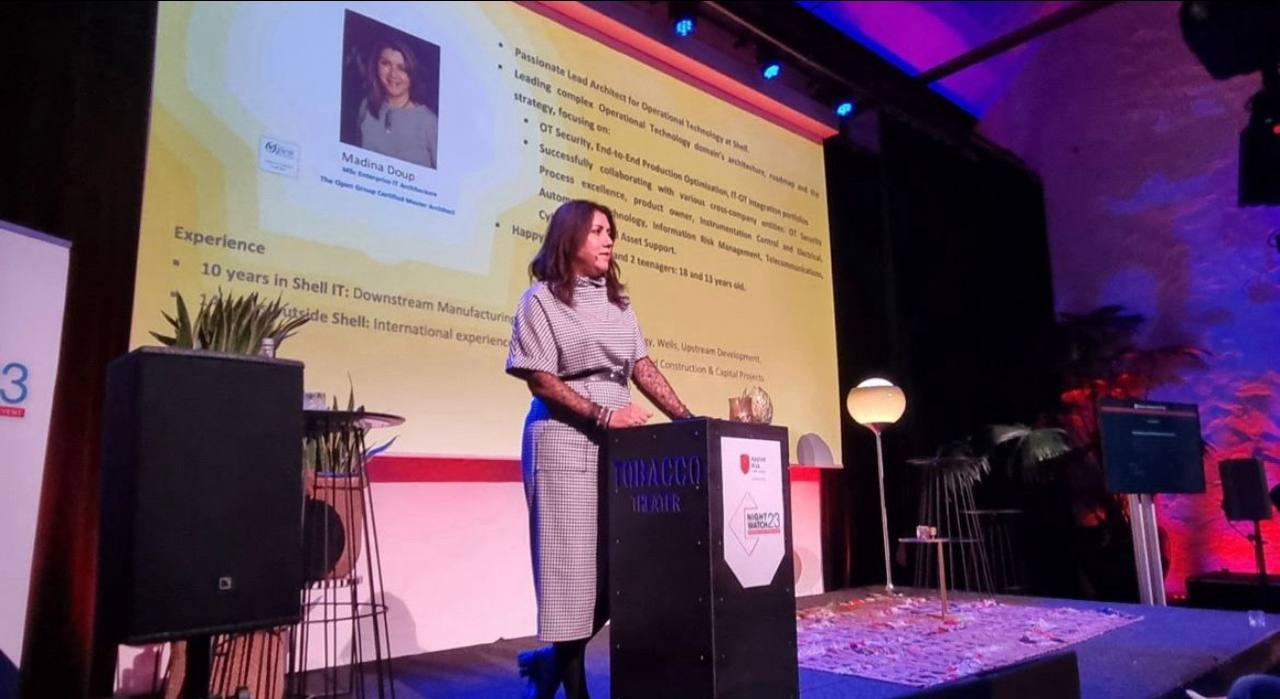
Since March of this year, I have been serving as Information and Digital Technology Manager. Prior to this, I spent nearly seven years as a Lead IT Architect at Shell. Transitioning from IT architecture to the field of data, artificial intelligence, and innovation was a deliberate career decision.
In this role, I address the company’s strategic priorities: data management and AI implementation. The position allows me to combine my background in IT architecture with strategic thinking, thereby providing meaningful expertise to the business.
In addition to my master’s degree in Enterprise IT Architecture, I am a certified Master Solution Architect (The Open Group, Level 2) — one of approximately 900 professionals worldwide to hold this credential.
I lead a highly capable team of experts, with whom we develop digital and AI strategies and apply them in capital projects and engineering. Our responsibilities include enhancing and managing data quality, developing digital products, overseeing integration, assessing data value and significance, and designing new processes and architectural solutions.
I have been living and working in the Netherlands for 24 years. My first stay was in 2001, when I worked here for one year, after which my international career expanded: projects in the UAE (four years), France (one year), Russia, and finally, in 2006, I returned and have been residing here permanently since then.
At first, it was difficult to adapt to the culture — the Dutch are more reserved than people in Uzbekistan, and I often felt lonely. Over time, I made friends, and working in different countries taught me to adapt quickly and achieve goals under any circumstances.
I have preserved my connection with my homeland: I cook Uzbek dishes, instilled in my children a love for Uzbekistan, and my husband has also grown fond of the country. I believe every place has its own advantages — the key is to recognize them.
Competition is intense. The strongest competitors are professionals from India. However, there is an important nuance: in Europe and the United States, the emphasis is placed on quality and efficiency, not solely on cost. We, as professionals from Uzbekistan, are capable of delivering quality. We are polite, inquisitive, adaptable, and communicative. These qualities are valued highly.
Salaries are quite generous, but the key lies in understanding one’s value and niche in the market and clearly defining one’s objectives in advance. It is crucial to know your competitors and act accordingly when negotiating salary.
There is nothing better than one’s homeland. Growth in Uzbekistan is not only possible, but also necessary. We live in an era of globalization, Uzbekistan has reached a new stage of economic development, and borders have faded, particularly in the IT sphere, where both government and business are creating vast opportunities.
When I left in 2001, even the process of leaving the country required overcoming countless bureaucratic hurdles. I faced many obstacles. But now, after so many years, I continue to think of my homeland, and if at that time there had been as many opportunities as there are today, I would not have left.
It is essential to create jobs with competitive salaries, aligned with global market standards. There must also be projects and long-term career growth opportunities for young professionals.
I believe a combination of efforts can support local IT specialists:
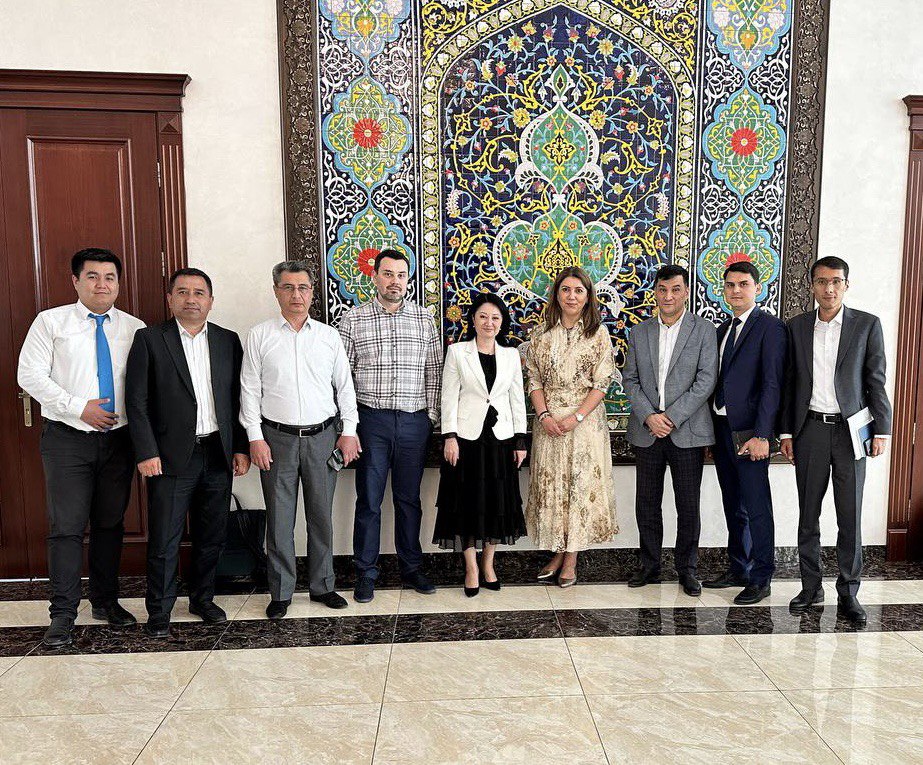
Much has changed — and for the better. Today, we are witnessing genuine growth in the startup ecosystem: young IT companies are emerging across diverse fields, from fintech to agritech.
The government plays a central role in this process. Technology parks are being established, tax incentives introduced, and initiatives launched that make the market attractive both for local specialists and international investors.
I would particularly highlight progress in education. The number of courses in programming, data science, and other IT disciplines has grown significantly. Young people now have access to quality training, providing powerful momentum.
Additionally, Uzbekistan has gained visibility internationally: foreign companies are entering the market, opening offices, and establishing partnerships. This is a strong signal — trust in the country is growing.
Equally important is the digitalization occurring within the country itself. We see how digital solutions are being introduced in healthcare, education, and banking. This improves quality of life and makes IT an inseparable part of daily existence.
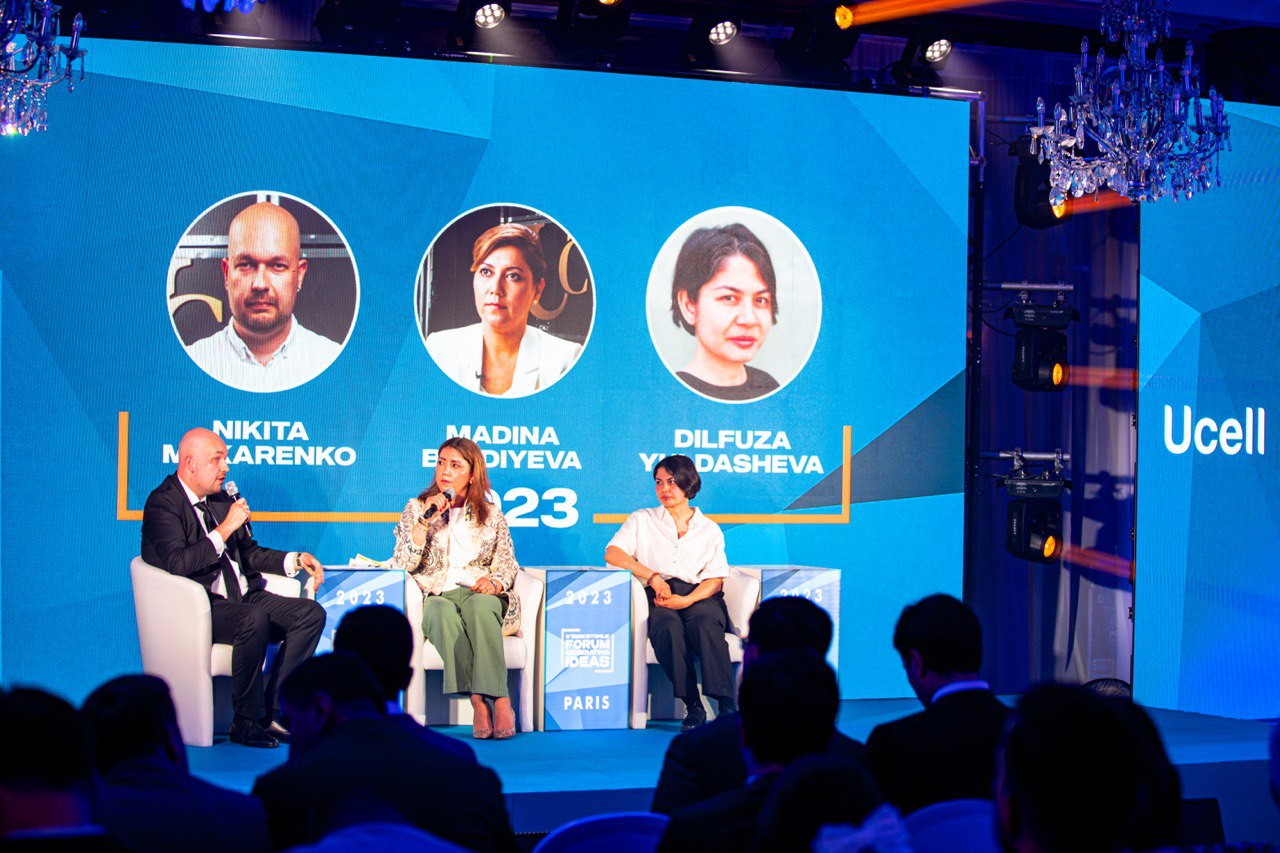
Much depends on one’s ambitions — whether to work for others or to create something of one’s own. The most important thing is to follow your true aspirations. At present, I am content with my lifestyle and do not wish to change anything.
09 October 2026
09 October 2026
09 October 2026
09 October 2026